


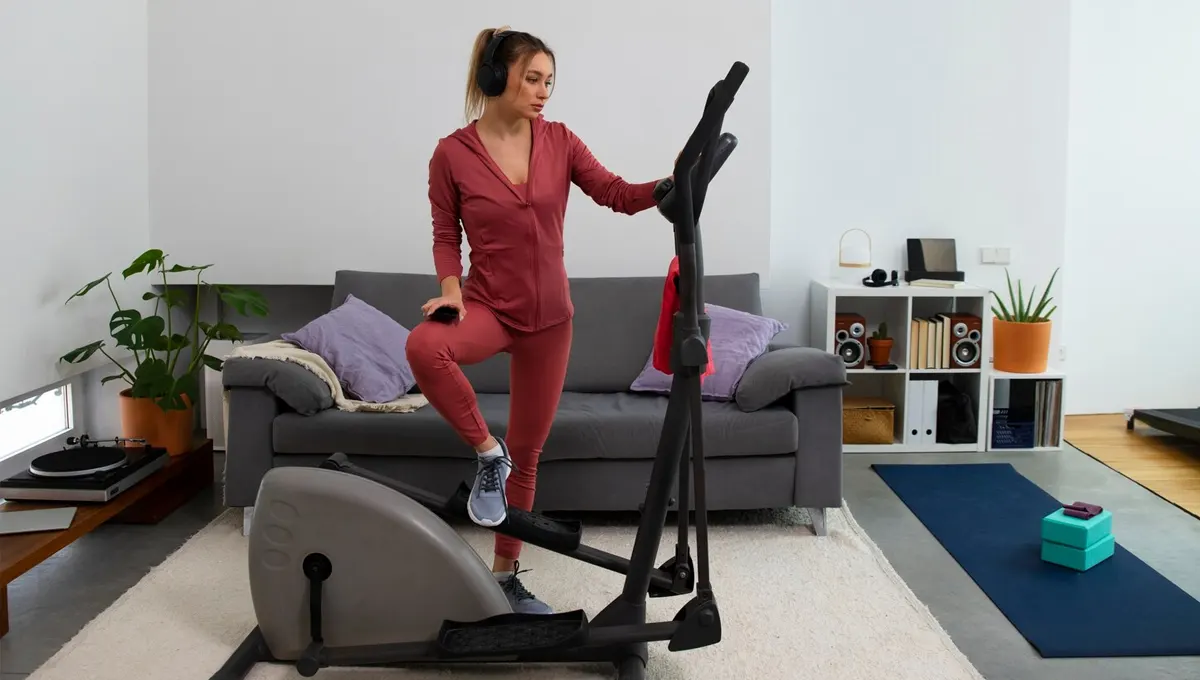
Home Gym Essentials Equipment That Builds a Real Training Space Without the Clutter
How much have you spent on gym memberships you used three times in January and barely touched after that?
About one third of US adults plan to buy fitness equipment in the near future as a direct response to rising membership costs, inconvenient hours, and the growing preference for training on their own schedule.
The shift makes financial sense: a well-chosen set of home gym equipment pays for itself within 12–18 months compared to an average gym membership cost and it's available at 6am, 11pm, or any minute in between.
This blog tells you exactly what to buy first, how to build around it, and how to make any space work for serious training.
Decathlon's home workout equipment range covers every stage of this build at prices that don't require a commercial gym budget.
Quick Overview:
|
What |
Home gym equipment builds in stages anchor piece first, strength additions second, cardio third, accessories last |
|
Why it matters |
Most home gyms fail because buyers purchase equipment before understanding their space, training style, and realistic usage frequency |
|
Key takeaway |
Start with one anchor piece that matches your primary training goal everything else is an addition to something that already works |
Why Home Gym Equipment Is Worth the Investment Right Now
Budget home gym setups can be assembled for $500–$1,000, while comprehensive setups with multiple stations range from $5,000–$10,000+. The gap between those two numbers is where most home gym planning goes wrong; buyers either underspend on a single item that doesn't cover their training needs, or overspend on a full setup before they know what they'll actually use.
Free weights are the most planned purchase among home fitness buyers, followed by treadmills and general home workout equipment driven by social media fitness culture and a preference for training flexibility that commercial gyms can't match. The data reflects a clear pattern: most people start with strength equipment and add cardio later, once the habit is established and the space is proven.
Well-maintained strength training equipment performs reliably for 10 to 15 years, with plate-loaded machines outlasting pin-loaded systems due to fewer mechanical components. That lifespan changes the economics of home gym equipment entirely; a quality set of adjustable dumbbells bought once costs less per workout over five years than almost any gym membership model available.
Home Gym Equipment Build in This Order, Not Any Other
The single most common home gym mistake is buying everything at once before knowing how the space works and which training format actually fits the routine. Most home gym owners start with one anchor piece and progressively add equipment as they identify training gaps and expand their programming. Follow this sequence.
1. Choose your anchor piece based on your primary training goal
Strength-focused training anchors around adjustable dumbbells or a barbell and weight rack. Cardio-focused training anchors around a stationary bike, treadmill, or rowing machine. Functional training anchors around a pull-up station or cable system. One anchor piece, chosen correctly, covers 70% of any training programme.
2. Add flooring before any other equipment
Space-optimised designs for modern living are reshaping the best home gym setup thinking but no design compensates for equipment used on an unprotected floor. Rubber gym tiles or a thick foam mat protect your floor, reduce noise, and prevent equipment movement during use. This is one of the most overlooked home gym essentials in any workout setup.
3. Add complementary strength equipment second
Adjustable dumbbells pair with a weight bench for pressing and rowing movements. A barbell setup pairs with a squat rack for compound lifts. Resistance bands add zero floor space and cover a wide range of accessory movements that fixed-weight equipment misses.
4. Add cardio equipment third only if you'll actually use it
Treadmills and stationary bikes are among the most planned home fitness purchases and among the most commonly abandoned. A jump rope and a set of kettlebells deliver comparable cardio conditioning in a fraction of the floor space at a fraction of the cost. Buy dedicated cardio equipment only when the strength setup is confirmed and regularly used.
5. Accessories last always
Resistance bands, ab rollers, foam rollers, and pull-up bars fill genuine training gaps at minimal cost and space. Buying accessories before anchor equipment is the fastest way to build a home gym that looks complete but trains nothing effectively
Compact Home Gym Setups What Fits in Every Space Type
Space-optimised designs for modern living spaces are one of the three major trends reshaping the best home gym setup decisions in 2026 alongside smart technology integration and commercial-grade construction becoming standard in premium home equipment. Decathlon's compact home gym range is specifically designed for smaller footprints without compromising on training versatility worth checking before defaulting to larger commercial-grade alternatives.
|
Space Type |
Floor Space |
Best Equipment Combination |
Estimated Budget |
Training Coverage |
|
Spare bedroom or small room |
10–15m² |
Adjustable dumbbells + bench + pull-up bar + resistance bands |
$500–$1,200 |
Full strength + bodyweight |
|
Garage or basement |
20m²+ |
Barbell + squat rack + weight plates + adjustable bench + flooring |
$1,500–$3,500 |
Full strength + compound lifts |
|
Living room / shared space |
Foldable only |
Foldable bench + resistance bands + kettlebells + yoga mat |
$200–$600 |
Functional + mobility |
|
Studio flat / minimal space |
Under 5m²** |
Adjustable dumbbells + resistance bands + pull-up door bar |
$150–$400 |
Strength + upper body focus |
Best Home Gym Setup Four Principles That Make Any Space Work
The best home gym setup isn't defined by equipment volume, it's defined by how consistently the space gets used. The best fitness equipment investment aligns with specific goals, space constraints, and budget successful setups combining smart technology with durable construction for a fitness environment that serves needs for years.
- Dedicated space over shared space: A corner of a room permanently set up for training outperforms a cleared living room every time. Friction before the workout kills consistency faster than any equipment gap.
- Mirrors and lighting are performance investments: Adequate lighting and a wall mirror improve form awareness, make the space feel larger, and significantly increase how often the room gets used for training.
- Cable management and storage matter from day one: Resistance bands, jump ropes, and smaller accessories without a dedicated storage solution become clutter within a week. A simple wall-mounted rack or storage bin costs under $30 and keeps the space functional.
- Buy quality on the anchor piece, budget everywhere else: Spend the majority of the home gym equipment budget on the one piece used in every session. Adjustable dumbbells, a quality barbell, or a reliable stationary bike last decades with basic maintenance. Accessories, benches, and flooring don't require the same investment tier.
Conclusion
Home gym equipment builds best in stages anchor piece first, complementary strength second, cardio third, accessories last.
Match the setup to your space before your ambition: a compact home gym with adjustable dumbbells and a bench outperforms an overstocked garage gym nobody uses. Rubber flooring, adequate lighting, and dedicated storage make any space train like a real gym.
Decathlon's home workout equipment range covers every stage of this build from first anchor piece to full compact home gym at prices designed for realistic home fitness budgets rather than commercial facility spending.
The gym you'll actually use is always better than the one you're still planning to start with one piece this week.
FAQ’s
- What is the best gym equipment to buy for home?
Adjustable dumbbells, resistance bands, a bench, and a treadmill are versatile home gym essentials for strength and cardio workouts.
- What is the 333 rule for gym?
The 333 gym rule involves three exercises, three sets, and three days weekly for consistent beginner-friendly fitness progress and routine.
- What gym equipment is good for osteoporosis?
Resistance bands, light dumbbells, weight machines, and walking treadmills help improve bone strength and support osteoporosis-friendly low-impact exercises safely.
- What is the best equipment for a home gym setup?
A complete home gym setup includes dumbbells, resistance bands, a bench, kettlebells, and cardio equipment for balanced full-body training.